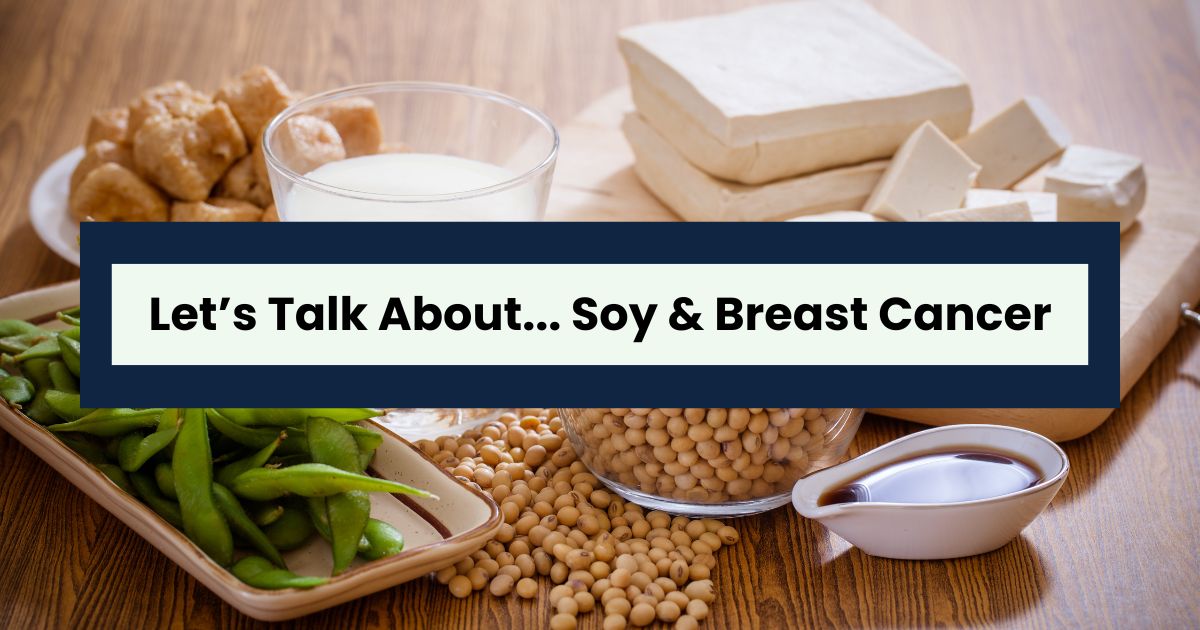
Soy & Breast Cancer
If you have been told to avoid soy foods after a breast cancer diagnosis, you are not alone!
There are lots of myths about soy and breast cancer.
In this blog we will take a look at how early fears about soy causing breast cancer have been debunked by large, global studies, and how soy foods may actually be beneficial to include in our diet …
What are soy foods?
Soy (also known as soya) foods are made from the soya bean plant.
Examples include tofu (curds made from pressed soy milk), tempeh (fermented whole soybeans) and edamame beans (tender, green soybeans harvested early in their pods).
Soy foods are a good source of protein, fibre, unsaturated fats and a wide range of vitamins and minerals including calcium, iron, magnesium, copper and potassium. They are also the richest dietary source of isoflavones which are a type of plant oestrogen (known as phytoestrogen).
Are soy foods safe?
Isoflavones have a similar chemical structure to the human hormone oestrogen. As oestrogen can stimulate some hormone-driven cancers to grow, there was, in the past, some concern that soy foods containing isoflavones might have the same effect as oestrogen and stimulate tumour growth.
However, large, global studies have shown that consuming plant oestrogens does not increase our own oestrogen levels.
From these trials, we now know that consuming soy foods is safe - there is no evidence that eating soy foods increases the risk of breast cancer or its recurrence.
Are soy foods beneficial?
Studies from East Asia (where soy foods are a staple part of the diet) have shown that a regular, moderate intake of soy foods (1-2 portions /day) is associated with a lower risk of developing breast cancer and a reduced risk of recurrence in breast cancer survivors.
The World Cancer Research Fund (WCRF) Continuous Update Project (CUP) on Breast Cancer survivors has rated the evidence as ‘limited suggestive’ that eating soy is associated with greater survival and decreased recurrence (including in women who had ER+ cancer).
Researchers have shown that isoflavones in soy foods have antioxidant and anti-inflammatory properties which may provide a protective effect by reducing damage to cells and stimulating DNA repair when cells are damaged. Isoflavones also bind to oestrogen receptors, potentially acting as a tumour suppressor.
The current evidence is not strong enough to recommend including soy foods specifically to reduce the risk of breast cancer, but there may be benefits of including these foods in our diet if we choose to do so.
Evidence also shows that regular consumption of soy foods can reduce hot flushes, which is something that many breast cancer patients experience following treatment.
There is also emerging research linking soy foods with a greater diversity of ‘good’ gut bacteria. Researchers are also currently exploring how this may benefit heart health, which is important for many cancer survivors.
What does a portion of soy look like?
1 portion soy = 125g soy yoghurt or soy dessert pot, 80g fresh / frozen edamame beans, 100g soy mince, 75g tofu (bean curd), 250ml soy milk.
Foods such as veggie burgers and protein bars made with soy ingredients (e.g. isolated soy protein or soy fibre) can be part of a healthy diet. However, they don’t count as a ‘portion’ of soy food because they usually have lower levels of isoflavones.
What about soy supplements?
There is no current evidence that soy (isoflavone) supplements have the same protective effects as soy foods and so they are not recommended for this purpose.
Key takeaways…
It is safe to include soy foods as a part of a healthy, plant-based diet after a breast cancer diagnosis.
Past concerns about soy foods causing breast cancer have been debunked by large, global studies.
There is some (limited) evidence that consuming soy foods may be beneficial in reducing the risk of breast cancer as well as lowering the risk of recurrence in breast cancer survivors.
If you want to include soy in your diet, choose whole soy foods, such as tofu, tempeh and edamame which are a rich source of isoflavones (plant oestrogens) as well as a good source of protein, fibre and other vitamins and minerals. If you do not have dairy, then soy milk is a good alternative nutritionally.
Soy (isoflavone) supplements are not recommended.
Getting Support
Everyone's situation is different - and what's right for you depends on your diagnosis, treatment and health history. If you'd like personalised support, our team is here to help…
Book a consultation with one of our cancer specialist dietitians
Useful Links:
British Dietetic Association (BDA) Food Fact Sheet: Soya foods and your health - BDA
References:
World Cancer Research Fund (WCRF) Continuous Update Project (CUP) on Breast Cancer: Breast cancer report and SLR | World Cancer Research Fund
American Institute for Cancer Research: https://www.aicr.org/resources/blog/soy-and-cancer-myths-and-misconceptions/